
What is Act 22?
Originalmente titulada “Ley Para Incentivar el Traslado de Individuos Inversionistas a Puerto Rico” fue aprobada en el 2012 y luego enmendada en el 2019, para formar parte de la Ley 60, “Código de Incentivos de Puerto Rico”, junto a otros incentivos.
¿A quiénes beneficia?
Con la promesa de atraer capital externo e inversionistas extranjeros al archipiélago la Ley 22 permite que aquellos que cualifiquen y obtengan decreto como individuos inversionistas puedan acceder a una variedad de beneficios para los cuales no cualifican las personas residentes de Puerto Rico.
Estos beneficios incluyen una exención contributiva del 100% sobre intereses, dividendos y ganancias de capital, lo que resulta en $0 de impuestos sobre esas fuentes de ingresos.
Act 22 Requirements
- Not being a resident of Puerto Rico between 2006 and 2012 and not having a taxable home outside of Puerto Rico.
- Reside at least 183 of 365 days a year in Puerto Rico.
- Donate $10,000 to Puerto Rican non-governmental organizations
- Buy a house in Puerto Rico during the two-year period after obtaining the decree
Why eliminate the provisions of Act 22?
1. Lack of Transparency
Despite this data being public information, it is not yet available to the general public or the press, even after specific requests and litigation in this regard. .
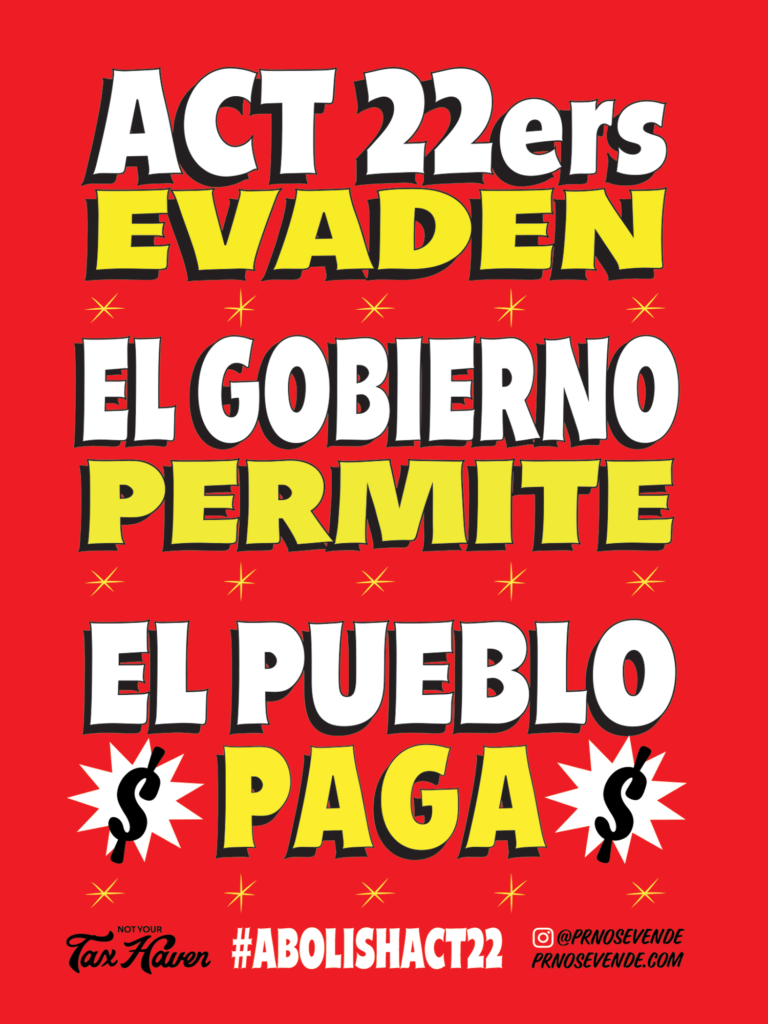
The Department of Economic Development (DDEC) "cannot" oversee the program adequately.
The agency in charge of granting and supervising the decrees has indicated that it does not have the necessary tools to supervise compliance with the decrees granted under Law 22. There was no supervision during the first eight years after the approval of the law, creating an information vacuum about the appropriate use, benefits or deficiencies of the program.
Who does the DDEC protect?
With its lack of transparency and desire to hide information about individual investors, the DDEC protects and benefits people who receive personal income or income from their companies fraudulently or illegally. From the beginning of Law 22 to the present day, individual investors have been accused of corporate and government fraud, money laundering, fraud, embezzlement, and investment fraud, among other crimes.
Despite the fact that the DDEC announced a general audit of compliance with Law 22 in March 2021, the results are still unknown as of this date.
2. IRS and Tax Evasion
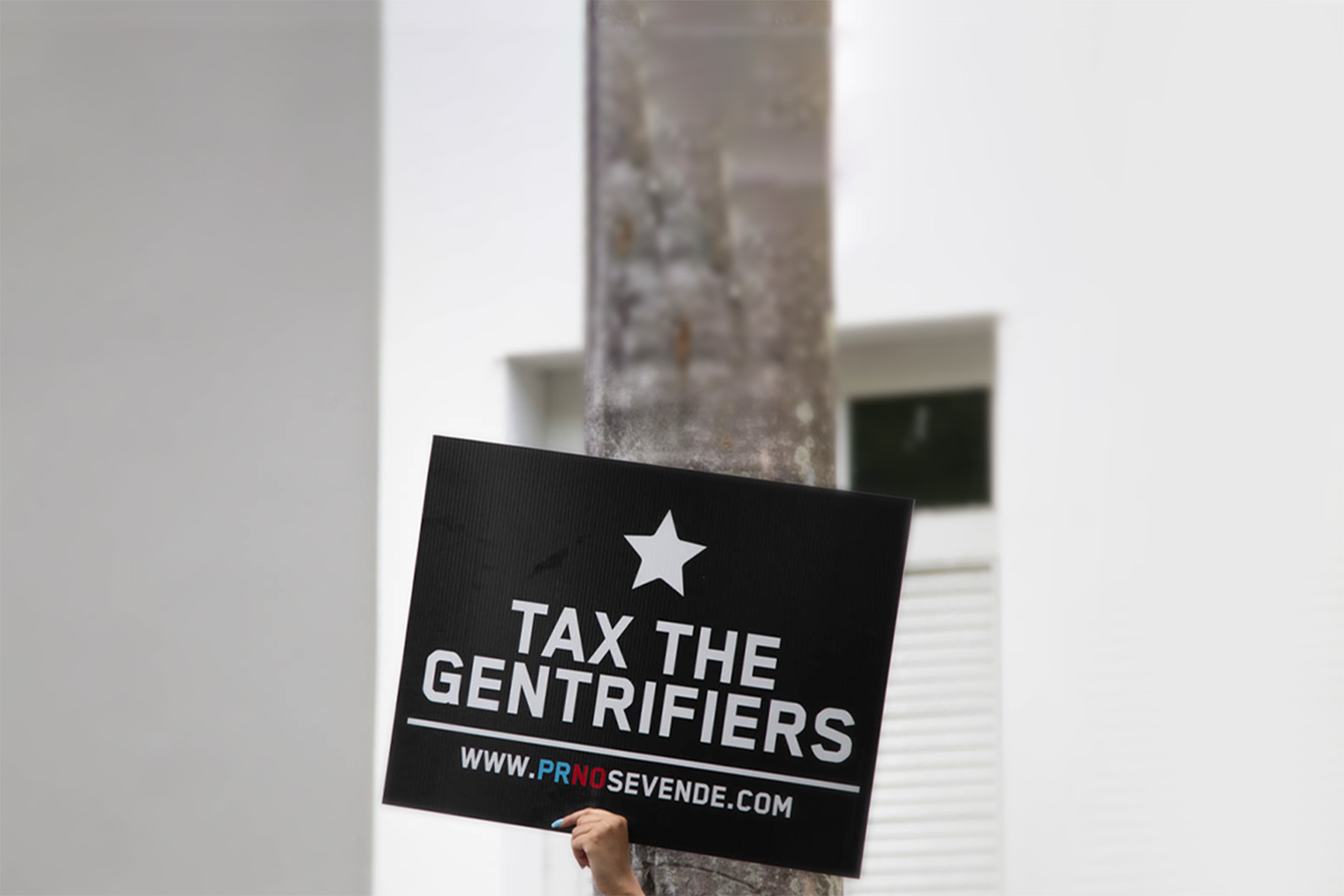
In 2023, the IRS announced an investigation of 100 wealthy Americans who may be using island’s tax breaks to cheat on taxes.
Individual investors “play” with the system in Puerto Rico
Individual investors who use the subterfuge of not declaring their income as coming from the United States benefit from the essential services provided by the states and Puerto Rico without paying taxes in any jurisdiction.
Even in compliance with IRC Section 937, the IRS believes that individual investors may be misreporting US source income as Puerto Rico source income to avoid paying taxes in the United States.
The United States Congress in search of explanations
The campaign carried out by the IRS originated when el Congress asked the IRS for a report on Puerto Rico's tax incentives due to concerns about the possibility of tax evasion practices.
Near the end of 2023, a dozen congresspeople sent a letter to the IRS asking for explanations regarding their lack of supervision of Law 22
In 2024, and anonymous agent inside the IRS denounced that the audit process of Law 22 had not been carried out properly. In response to these complaints, the agency announced that they would be assigning more agents to the investigation.
3. Economic Impact
Despite having very little information and transparency about who benefits and what are the profits of individual investors, the few data available reveal that the People of Puerto Rico lose billions of dollars due to Law 22.

The Department of the Treasury that cannot do anything
The data available on the economic impact of the decrees granted is very scarce and one of the reasons is that the Treasury Department has neither sufficient authority nor resources to oversee and revoke decrees.
As published by the Treasury in March 2023 in its Informe de Gastos Tributarios para los Años contributivos 2024 a 2030, el Gobierno de Puerto Rico ha dejado de generar alrededor de $18,400 millones por concepto de la Ley 22.
Más de dieciocho mil millones perdidos en medio de una crisis fiscal donde el país sufre incertidumbre sobre la operación de servicios esenciales.
The Department of Economic Development (DDEC) has gone years without auditing beneficiaries
From 2015 to 2021, the DDEC had not verified any annual report filed by individual investors individual investors, failing to comply with its obligation under the statute to audit the 3,311 people covered by Law 22.
El Secretario de Hacienda ha establecido que la falta de transparencia dentro del DDEC sobre quiénes tienen decrees in force under Law 22 means that the Treasury only has an estimated number of forms that it must receive from the beneficiaries of Law 22. There is no way to have a real measurement of the economic impact of a group without knowing who and how many they are.
4. Displacement
The purchase of properties and land by individual investors has disproportionately increased property values in the areas and towns where their investment has been concentrated. individuos inversionistas ha incrementado considerablemente el precio de bienes raíces en áreas y pueblos donde se ha concentrado su inversión. Most Puerto Ricans are unable to pay the inflated purchase prices and inflated rents of today's market.
This has led to the displacement of Puerto Ricans from their communities where they have their personal, family, cultural and historical ties. These communities are forever disrupted and their continuity and history are endangered.
Nearly 50% of the families that rent in Puerto Rico invest more than a third of their income towards paying rent. This increases their home insecurity, particularly when faced with risks such as natural disasters and unemployment.
In its customary lack of transparency, the government of Puerto Rico does not provide official data on the tendency of individual investors to buy properties that make up entire neighborhoods and communities. These investors are buying up entire sectors, forcing communities to move to then convert the properties into AirBnB or for resale at much higher prices.
The displacement and gentrification that began in the municipality of Dorado and sectors of the metropolitan area, has now become a threat in many areas, particularly coastal towns, around the entire island. Some examples are:
The Municipality of Quebradillas
A former Republican senator from Rhode Island, Giovanni Feroce, displaced renters who were already paying about $600 a month, already exceeding the average monthly rent in that municipality.
In anexample of the dubious reputation of various individual investors, Feroce is listed as #3 on the list of the 100 biggest tax offenders in the state of Rhode Island, with a debt of $1.2 million.
Municipality of Cabo Rojo
A group of residents of a community in that municipality were forced to sell their properties after they were denied the necessary construction permits to fix their homes after Hurricane María.
After they sold their properties, the new owners were granted the necessary permits to redevelop the properties for the purpose of selling them at a higher value or using them as short-term rentals.
Residents of Puerta de Tierra, San Juan
Residents of Puerta de Tierra, where entire blocks of the historic community have been displaced, as well as residents of the communities of Santurce in San Juan.
The municipalities of Vieques, Quebradillas, Aguadilla, Luquillo and Rincón requested the Legislative Assembly to repeal Act 22 due to its local impacts..
5. Environmental Impact
The property and land purchases by individual investors has had a direct impact on the environment, especially land near the coasts and those near natural landscapes, which are preferred by investors.
Illegal Development of Natural Resources
This new trend in the real estate market has disproportionately increased the value of coastal land, beaches, and mangroves that protect the coasts of Puerto Rico and other natural resources.
The new market value of these properties and lands and the ability to generate profits have led to their development without considering the environmental impact and often illegally.
Several investment and development projects that directly affect the environment have recently been denounced.
Denounced Proyects
- The Deforestation of mangroves and filling of wetlands in a nature reserve in Salinas for private use..
- The expansion of a luxury housing complex, Bahia Beach, in Río Grande, which threatens the Espiritu Santo Nature Reserve.
- The Luxury housing development for sale directly above the Las Golondrinas cave in Aguadilla.

 EN
EN  ES
ES